What Is the Best Folding Door for Your Project?
Choosing the best Folding Door begins with the project, not the product brochure. Room size, opening width, weather exposure, traffic frequency, and available stacking space all matter. A slim aluminum system may suit a bright restaurant frontage, while a thermally broken door may better serve a family room in a cold climate. Measure twice. Small errors can create uneven panels, difficult operation, and unwanted air leakage.
Industry specialist Bob Vila has observed, “The right door can transform how a space feels and functions.” That principle applies strongly to Folding Door selection. Look closely at panel weight, hinge quality, track design, drainage, glazing performance, and replacement-part availability. A showroom sample may glide beautifully, but real performance depends on installation and long-term maintenance. Ask how the system handles wind, rain, daily opening cycles, and cleaning. These questions reveal more than a polished display.
A practical choice.
I have seen projects focus heavily on appearance and underestimate threshold details. That mistake can affect accessibility, water control, and floor finishes. The best Folding Door should connect spaces smoothly without becoming a constant repair concern. Still, no system is perfect. Large glass panels can show fingerprints, tracks collect debris, and premium hardware increases the budget. This guide compares common configurations, materials, and performance factors, helping you judge what fits your project honestly. The goal is not choosing the most expensive door. It is choosing a dependable opening that matches the building, the users, and the conditions.
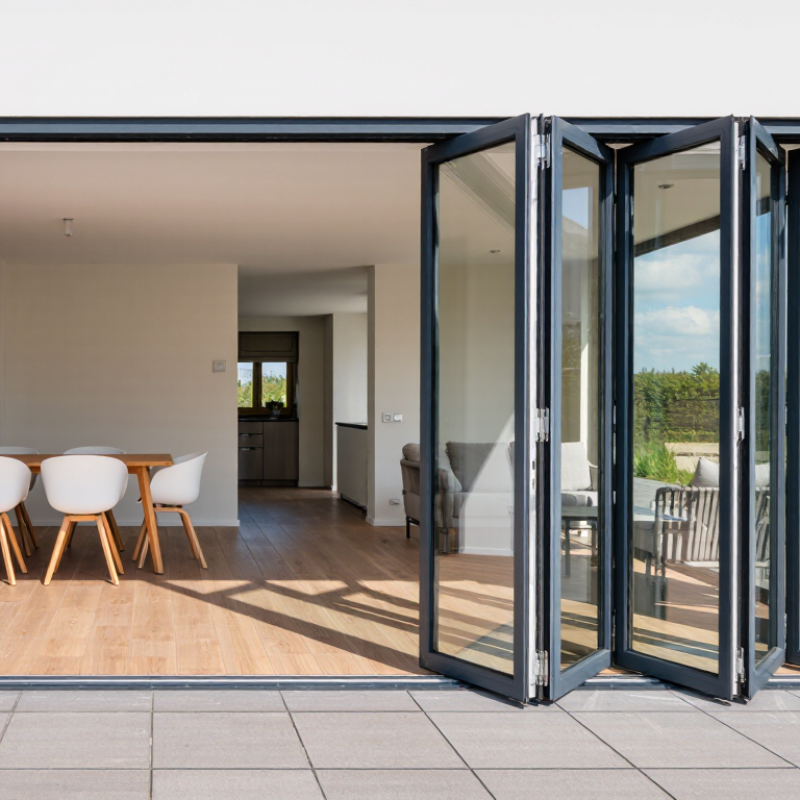
Define Your Project’s Space, Function, and Performance Requirements
What Is the Best Folding Door for Your Project?
Define the opening before choosing the door. Measure the finished width, ceiling height, floor level, and panel-stacking zone. A six-metre opening may need three panels each way. A narrow terrace may need one-way stacking instead. Confirm daily traffic, furniture movement, emergency access, and cleaning routines. The most attractive configuration can become inconvenient when panels block lighting or furniture.
Performance deserves equal attention. The International Energy Agency’s Buildings report states that buildings used about 30% of global final energy in 2022. The U.S. Department of Energy also reports that windows can cause 25–30% of residential heating and cooling energy use. Therefore, compare U-values, solar heat gain coefficient, air leakage, and water resistance. Coastal projects need stronger corrosion resistance. Exposed elevations need verified wind-load performance. Acoustic ratings matter beside roads or restaurants. Small details matter.
Do not judge the system by showroom movement alone. Test the threshold with wet shoes, dust, and repeated operation. Check whether drainage remains clear after heavy rain. I would also question oversized panels in high-use areas. They look impressive, but they can feel heavy and require careful alignment. Accessibility, maintenance access, and replacement parts should shape the specification. Sometimes, a smaller opening performs better. That is not glamorous, but it is often more reliable.
Evaluate Energy Efficiency, Security, Durability, and Accessibility
What Is the Best Folding Door for Your Project?
The best folding door balances energy efficiency, security, durability, and accessibility. In project reviews, I examine the whole opening, not only the door panel. A thermally broken frame can reduce heat transfer. Low-emissivity glazing may also improve indoor comfort. However, poor installation can defeat both features. Check tested U-values, air leakage, and water resistance before choosing.
Security depends on more than a strong lock. Look for reinforced panels, dependable hinges, and a multi-point locking system. Laminated safety glass can help resist impact and remain partly intact if broken. A narrow track may look elegant, but it can collect grit and affect closing. Keep drainage channels visible and serviceable. Small details matter.
Durability requires realistic testing. Ask about cycle testing, corrosion resistance, replacement parts, and maintenance intervals. A door facing coastal air needs different protection from one inside a dry office. Accessibility deserves equal attention. Choose a low or flush threshold, smooth rollers, adequate clear width, and manageable operating force. I once focused too heavily on insulation and underestimated daily usability. That choice looked efficient on paper, but users struggled with the handle. A practical site trial can reveal problems that specifications miss.
What Is the Best Folding Door for Your Project?
Comparison of common folding-door configurations across energy efficiency, security, durability, and accessibility. Scores use a 1–5 specification benchmark, where 5 represents the strongest typical performance.
Key takeaway: Thermally broken lift-and-slide systems typically provide the strongest overall balance, while low-threshold folding systems offer better accessibility. Final performance depends on the frame material, glazing, hardware, weather seals, installation quality, and tested certification.
Assess Installation Conditions, Maintenance Needs, and Operating Costs
Choosing the best folding door begins with the opening, not the brochure. On retrofit sites, uneven slabs, limited headroom, wind exposure, and nearby traffic often decide the design. Measure twice. Small errors compound.
Installation conditions also shape maintenance. A door exposed to dust or moisture needs accessible rollers, protected hardware, and simple drainage paths. The U.S. Department of Energy’s Commercial Buildings Energy Consumption Survey reports that space heating represents about 32% of U.S. commercial building energy use. Poorly sealed folding doors can increase drafts and equipment runtime, especially in conditioned spaces. However, energy savings depend on opening size, climate, traffic, and operator behavior. That limitation matters.
Operating cost is more than the purchase price. Estimate annual cycles, electricity use, inspection labor, replacement parts, and downtime. A high-cycle opening may justify powered operation, while a lightly used partition may favor manual movement. ASHRAE Standard 90.1 emphasizes controlled air leakage and reliable envelope performance, but compliance does not guarantee low maintenance. Site records are stronger evidence. Track faults, service hours, and energy bills for six to twelve months. A spreadsheet can expose assumptions that sound convincing but remain untested. Check clearances, drainage, and emergency access before final approval.
Choose the Best Folding Door Based on Your Project Priorities
What Is the Best Folding Door for Your Project?
Choose the best folding door based on your project priorities, not appearance alone. A busy restaurant may need fast operation, strong hardware, and easy cleaning. A home office may value sound control and steady indoor temperatures. Large glass panels can bring in daylight, but they may also increase heat gain and glare. Project priorities should guide every decision. This sounds simple. It is often overlooked.
Project priorities
Choose the best folding door based on the needs of the space, its users, and its daily operation.
Measure the opening carefully before comparing door systems. Record the width, height, floor level, and available stacking space. Check whether the track can carry the panels safely. For outdoor openings, review drainage, wind exposure, and weather seals. For public spaces, consider smooth operation and accessible thresholds. An experienced installer can identify problems that drawings may miss. I once saw a beautiful opening reduced by a poorly planned panel stack. That small oversight changed the furniture layout.
Tips: List your top three priorities before requesting quotes. Ask for tested performance data, maintenance requirements, and installation details. Visit a completed project if possible. Pay attention to how the door moves, seals, and locks. Do not choose the widest opening automatically. A lighter system may operate better and last longer. No option is perfect. Your priorities may change after you see the space in use.