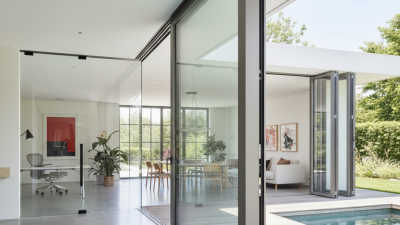
A Glass Door can make a room feel brighter and more open, but appearance is only part of the decision. The right choice depends on where it will be installed, how often it will be used, and how much privacy the room needs. A clear panel can carry daylight from a hallway into a dim kitchen. Frosted glass may soften that view while still allowing light through. Small details matter.
Architect Ludwig Mies van der Rohe’s well-known phrase, “Less is more,” offers a useful design lens for glass doors: clean lines can make a space feel calm, but simplicity alone does not make a door practical. Buyers should also compare framed and frameless styles, sliding and hinged operation, glass thickness, hardware, and ease of cleaning. A door that looks elegant in a showroom may feel awkward in a narrow passage. That trade-off is easy to miss.
This guide explains what a Glass Door is, how common types differ, and which features matter for different rooms and budgets. It also considers safety glazing, installation requirements, and maintenance, since product suitability depends on the opening and the manufacturer’s specifications. No single style fits every home. Measure carefully, check the door’s intended use, and ask a qualified installer about the conditions at your site. A little caution helps. The best choice is the one that suits daily life, not just the photograph.
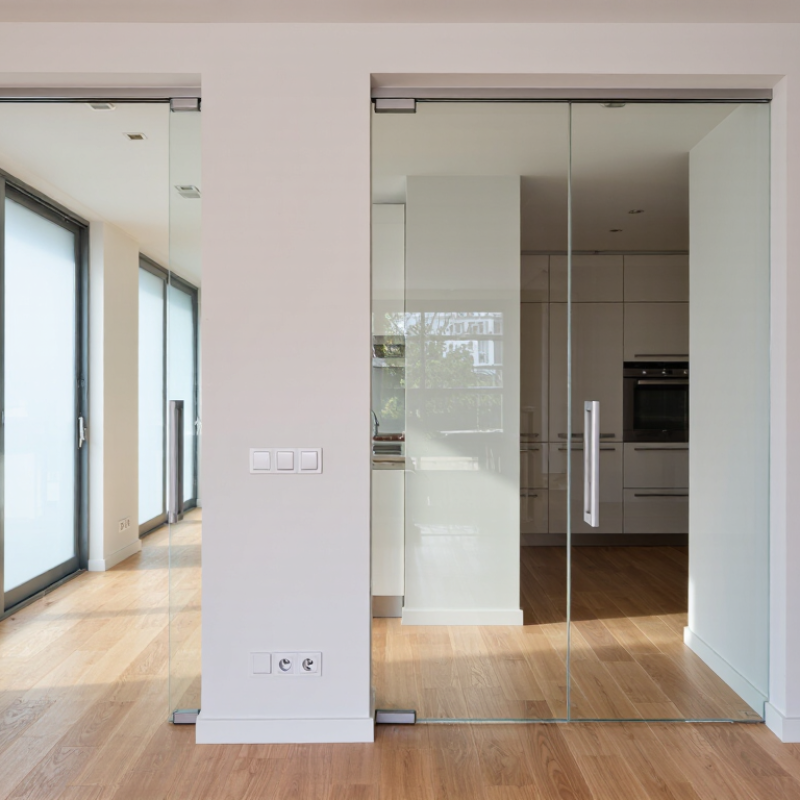
A glass door is a movable panel made partly or mostly from glass, set in a frame or supported by hardware. It lets daylight pass between rooms while still separating spaces. Depending on its design, the panel may swing on hinges, slide along a track, or pivot from a central point. A sliding door, for example, moves on rollers inside a track; a hinged door turns on fixed hinges when someone pushes or pulls it. Simple, but not effortless.
The glass is usually safety glass, such as tempered or laminated glass, selected for the door’s location and intended use. Tempered glass is heat-treated to improve its strength and breaks into smaller pieces if it fails. Laminated glass holds together between layers after cracking.
The frame, hinges, rollers, seals, and handle all affect how smoothly the door works. A poorly aligned track can make a sliding panel drag, while worn seals may let in drafts or sound. Small details matter.
Buyers should check the door’s measurements, clearance, privacy needs, and cleaning requirements before choosing a style. A clear panel brightens a hallway, but it may show fingerprints quickly. Frosted glass offers more privacy, though it still needs regular cleaning. I’ve found that people often focus on appearance and overlook hardware access. That can be annoying later. Have the opening and surrounding structure assessed when the installation is not straightforward.

Glass doors are commonly grouped by how they open and where they are installed. Sliding glass doors move along a track, making them useful beside patios where a swinging panel would take up floor space. Hinged doors swing inward or outward and provide a familiar, tight-closing entry. French doors use two hinged panels; both can open wide, though the panels need clear space.
Folding doors stack several panels to one side, creating a broad opening, but their tracks and hardware need regular cleaning. Frameless glass doors are often used for showers, where minimal framing keeps sightlines open. They look simple. They still need careful measurement and sturdy supports.
Glass type matters as much as the opening style. Tempered safety glass is commonly selected for doors because it breaks into small pieces rather than sharp shards. For exterior doors, buyers should also check insulating features, frame quality, and weather seals.
The U.S. Department of Energy reports that heat gain and loss through windows account for 25–30% of residential heating and cooling energy use; this is a useful glazing benchmark, not a door-specific estimate. Look for verified performance ratings, such as those provided through the National Fenestration Rating Council, and compare products for the local climate.
A low-maintenance track sounds ideal, but grit can still make it stick.
A glass door’s performance depends on more than its appearance. The frame, glazing, seals, and hardware all matter. The U.S. Department of Energy reports that windows account for about 25%–30% of residential heating and cooling energy use. That figure is not specific to doors, but it shows why large glazed areas deserve careful attention. Compare the National Fenestration Rating Council label: a lower U-factor indicates better insulation, while the solar heat gain coefficient helps show how much solar heat enters. In a sunny room, that difference can affect comfort.
Material choices shape daily use. Insulated glass with two panes and a sealed air space generally slows heat transfer better than single glazing. Low-emissivity coatings can further reduce heat movement while admitting daylight. For a door exposed to impact or frequent use, ask about safety glazing and confirm that the glass is suitable for its location. Frames matter, too: thermally improved frames can reduce cold edges, while quality weatherstripping helps limit drafts. Check the seals and operation in person. The latch should engage cleanly, and the door should not scrape or rattle. A high rating cannot fix a poor installation. I would still compare real samples; ratings can feel abstract beside a chilly floor.
Buyers should compare glass doors by where they will be installed, how they will be used, and how much privacy they need. A clear panel brings daylight into a hallway, while frosted or patterned glass softens views between rooms. For bathrooms or street-facing entrances, check how much detail remains visible when the room is lit at night. A sample viewed in a showroom may look different beside your own window.
Next, consider the frame, glass thickness, opening style, and hardware as one system. A sliding door can save floor space, but its track needs regular cleaning and careful installation. Hinged doors need room to swing. Ask whether the glass is safety-rated for the intended location, and confirm that the frame and hinges are suitable for its weight. The door should open smoothly, without rubbing or rattling.
Think about upkeep, too. Water spots show quickly on clear glass; textured surfaces may take longer to wipe clean. Compare written specifications, warranty terms, installation requirements, and replacement-part availability rather than relying on appearance alone. Small details matter. I would also check the handle height and edge finish in person, since these can be easy to overlook in product photos. No option is perfect; the right choice depends on the room and daily habits.
For patios and compact rooms, sliding glass doors are often the practical choice. Their panels move along a track, so they do not swing into furniture or walkways. Check the track in person; grit can make even a good door feel frustrating.
The U.S. Department of Energy estimates that windows account for 25–30% of residential heating and cooling energy use. While that figure is not specific to doors, it highlights why insulated glazing and well-sealed frames matter on exterior models.
Hinged and French glass doors suit buyers who want a wider, familiar entrance. They need clear floor space to swing open, which can be awkward in a narrow kitchen. For a broad opening onto a deck, folding glass doors can create a nearly continuous passage, but their many panels and seals need careful upkeep.
The U.S. Department of Energy recommends choosing glazing suited to the local climate and checking whole-unit performance, including the frame. A low U-factor generally helps limit heat transfer. Look for rated product data, not just claims about the glass.
For bathrooms or ground-level doors, privacy and impact resistance may matter more than an uninterrupted view. Textured or frosted glass obscures sightlines while admitting light.
Tempered safety glass is designed to break into smaller pieces than ordinary annealed glass, though it is not unbreakable. Local building requirements vary, so verify the required safety glazing before ordering. Small detail, big consequence.