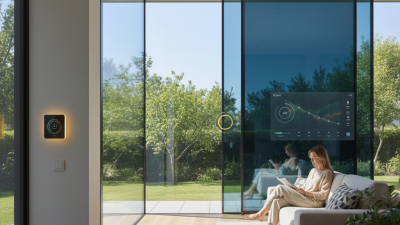
China’s smart building market is moving beyond tinted glass and basic automation. Smart Windows now combine electrochromic materials, sensors, controls, and building-management systems. These technologies can adjust solar heat, glare, daylight, and indoor privacy within seconds or minutes.
Steve Selkowitz, a respected building-energy researcher, once described dynamic glazing this way: “Dynamic windows can control the sun, not simply block it.” His observation explains why manufacturer selection requires more than comparing glass appearance. Buyers should examine switching speed, visible light transmission, insulation performance, control compatibility, warranty terms, and tested service life.
The leading China Smart Windows manufacturers differ in engineering depth and production focus. Some specialize in electrochromic glass. Others integrate polymer-dispersed liquid crystal films, automated blinds, or complete facade systems. A showroom sample may look impressive. Real performance depends on climate, window orientation, wiring, software, and installation quality.
Details matter.
A south-facing office in Shenzhen may need aggressive solar control, while a northern factory in Harbin may prioritize heat retention. Manufacturers with verified laboratory data deserve closer attention. Independent certifications and project references also reveal practical reliability. Yet no supplier is perfect. Marketing claims can appear clearer than the technical evidence. This guide compares major Chinese manufacturers through product capability, customization, manufacturing experience, and after-sales support. It also recognizes an uncomfortable truth: the “best” supplier may change with each building’s budget, climate, and control requirements.
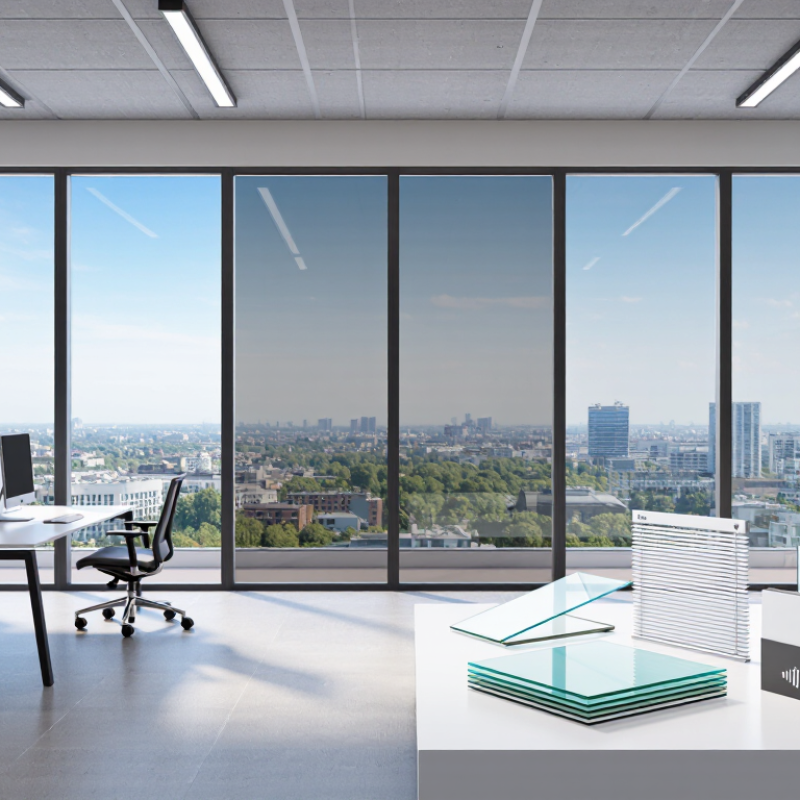
Smart windows are glazing systems that adjust solar heat and daylight transmission. They respond to electricity, heat, or light conditions. Electrochromic glass changes tint through a low-voltage chemical reaction. Thermochromic materials react to rising temperature. Suspended-particle designs align microscopic particles when voltage changes.
Their operation is practical but not magical. Sensors can measure indoor temperature, outdoor brightness, and glare. A control system then adjusts the window’s optical state. In a sunny office, darker glass can reduce glare on a laptop screen. In winter, clearer glass may admit useful sunlight. The U.S. Department of Energy reports that windows can influence about 25–30% of residential heating and cooling energy use. The real benefit depends on orientation, climate, shading, and control settings.
The International Energy Agency states that buildings consume about 30% of global final energy. This places efficient glazing within a wider energy strategy. Yet smart windows still require careful installation. Switching speed, visible light quality, wiring, and maintenance can vary significantly. Some projects also underestimate occupant preferences. That is a design weakness, not only a technical one. Field studies from Lawrence Berkeley National Laboratory indicate that dynamic glazing can reduce cooling demand in suitable buildings, but performance is highly site-specific. Manufacturers should therefore provide tested optical data, control specifications, and long-term durability results. Numbers alone are not enough.
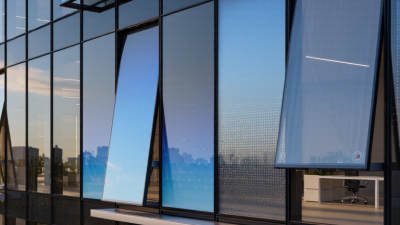
How to Evaluate China’s Smart Window Manufacturers
Evaluating China’s smart window manufacturers requires more than comparing online prices. Request factory documents, production photos, and recent project references. A reliable supplier should explain glass composition, motor systems, control protocols, and insulation performance clearly. Ask for U-value, solar heat gain coefficient, and visible light transmission data. These figures help match the window with a building’s climate and energy goals.
Inspect the sample carefully. Check frame joints, gasket alignment, wiring protection, and glass edges. Operate the window repeatedly, not just once. Listen for uneven motor noise. Ask how many cycles the actuator has passed during testing. Manufacturing capacity also matters, but quality control matters more. Review inspection records for glass, electronics, coating, and final assembly. Independent laboratory reports can strengthen technical claims, especially for fire, impact, and thermal performance.
Communication reveals practical reliability. Can the engineering team provide accurate drawings within a reasonable time? Do they explain installation tolerances and replacement procedures? Confirm warranty terms, spare-part availability, software updates, and after-sales response times. A small pilot order is safer than approving a large shipment immediately. This method is not perfect. A polished factory tour may still hide weak process control, while a modest facility may deliver consistent work. Keep written records, question impressive claims, and test the exact configuration you intend to purchase.
| Evaluation Dimension | Key Data to Collect | Practical Benchmark | Recommended Evidence | Importance |
|---|---|---|---|---|
| Product Scope | Window type, glazing configuration, frame material, opening style, and automation functions | The supplier should provide a solution matching the project’s climate, building type, dimensions, and ventilation requirements | Technical catalogue, sectional drawings, configuration sheet, and project-specific proposal | High |
| Thermal Performance | Whole-window U-value, glazing U-value, solar heat gain coefficient, and air leakage | Use independently tested whole-window values; lower U-value generally indicates better heat-transfer resistance | Laboratory test report, calculation method, glass specification, spacer details, and frame profile data | High |
| Glazing and Low-E Configuration | Number of panes, glass thickness, cavity width, gas fill, Low-E coating, and laminated or tempered treatment | The specification should be selected according to local thermal, acoustic, safety, and solar-control requirements rather than marketing terms | Glass make-up sheet, coating data, safety-glass certification, and sample inspection | High |
| Automation and Motor System | Motor type, rated load, operating speed, noise level, duty cycle, manual override, and power consumption | The motor must be sized for the sash or shading load and should include safe manual operation during power or network failure | Motor datasheet, load test, cycle test, wiring diagram, and installation instructions | High |
| Connectivity and Control | Communication method, local control, cloud dependence, mobile application, API availability, and smart-home compatibility | The supplier should clearly identify supported protocols and explain how the product operates if internet access is interrupted | Protocol documentation, integration guide, app demonstration, cybersecurity policy, and firmware-update procedure | High |
| Safety and Compliance | Electrical safety, electromagnetic compatibility, child safety, fire performance, and market-specific product requirements | Documents must correspond to the exact model, electrical rating, and destination market; generic certificates are insufficient | Declaration of conformity, accredited laboratory reports, product labels, and traceable certificate numbers | High |
| Weather Resistance | Water tightness, wind resistance, air permeability, drainage design, seal quality, and corrosion resistance | Performance should be verified using the testing classification required by the destination market and building code | Air, water, and wind test reports; sealant specifications; hardware material declarations | High |
| Customization Capability | Maximum and minimum dimensions, special shapes, colors, glass options, hardware, screens, and installation interfaces | Custom requirements should be confirmed through approved drawings before production; unsupported dimensions should not be accepted informally | Signed shop drawings, structural calculations where required, approved samples, and change-control records | Medium |
| Manufacturing Quality Control | Incoming-material inspection, process controls, final inspection, traceability, and nonconformance handling | A documented quality-management system should cover frames, glass, motors, electronics, assembly, packaging, and corrective actions | Quality manual, inspection records, calibration certificates, batch records, and factory-audit results | High |
| Testing and Reliability | Opening-cycle endurance, motor thermal protection, sensor reliability, seal durability, and transport robustness | Testing should reflect the intended operating environment and use conditions, with failures recorded and corrected | Endurance-test plan, test results, failure analysis, inspection photographs, and packaging drop-test records | High |
| Installation and Commissioning | Installation tolerances, site measurements, wiring requirements, commissioning steps, and installer training | The supplier should provide clear installation documentation and define responsibility for site measurement, wiring, testing, and handover | Installation manual, method statement, commissioning checklist, training records, and approved site-measurement form | High |
| Supply Chain and Delivery | Material availability, production capacity, lead-time assumptions, packaging, export experience, and spare-parts availability | Delivery commitments should be based on approved specifications and should include a documented process for shortages or delays | Production schedule, capacity statement, packaging specification, shipping records, and spare-parts list | Medium |
| Warranty and After-Sales Service | Warranty duration, covered components, response time, remote diagnostics, replacement policy, and local service capability | Warranty terms should separately define coverage for glass, frames, motors, controllers, sensors, software, and installation workmanship | Written warranty, service-level agreement, troubleshooting guide, spare-parts policy, and service contact details | High |
| Commercial Evaluation | Total installed cost, tooling charges, engineering fees, payment terms, minimum order quantity, and lifecycle cost | Compare complete delivered and installed cost rather than unit price alone, including commissioning, replacement parts, and software-related costs | Itemized quotation, commercial terms, cost exclusions, installation estimate, and five-year maintenance assumptions | Medium |
Note: Manufacturer claims should be accepted only after the model-specific specifications, test reports, certificates, samples, and factory records have been independently verified.
Leading smart window manufacturers in China usually specialize in electrochromic glass, motorized shades, automated skylights, or complete control systems. The strongest manufacturers provide clear technical drawings, sample testing, and project references. They also explain glass thickness, switching speed, heat performance, and expected service life. These details matter more than polished online photographs.
From supplier evaluations, reliable factories usually maintain stable production lines and documented quality checks. Look for tests covering insulation, light transmission, motor durability, and control-system compatibility. Manufacturers serving hotels, offices, and residential projects should understand local climate conditions. A factory experienced with humid coastal areas may recommend different sealing methods for colder regions. This practical knowledge can prevent expensive installation problems. Still, no supplier is perfect. Some impressive samples may hide weak after-sales support or inconsistent delivery schedules.
Tips: Request a working sample before placing a large order. Test the window beside bright sunlight and indoor lighting. Ask for recent inspection records, warranty terms, replacement procedures, and installation guidance. Confirm whether the control system supports your preferred wiring or smart-home platform. Do not judge quality from price alone. A cheaper frame may bring higher maintenance costs later.
Chinese smart window manufacturers are developing products for offices, hospitals, hotels, homes, and transport facilities. Their main technologies include electrochromic glass, PDLC switchable glass, and solar-control glazing. Electrochromic glass changes tint gradually through electrical control. PDLC glass switches quickly between transparent and opaque states. It is useful for meeting rooms and bathroom partitions.
Many suppliers also produce laminated smart glass, insulated glass units, and switchable window film. These products can combine privacy control with thermal insulation, sound reduction, and ultraviolet protection. Some factories integrate low-emissivity coatings, aluminum frames, sensors, and central control systems. Users may adjust tint through a wall panel, remote controller, or building management platform. Motion and daylight sensors can reduce unnecessary switching.
Details matter more than impressive samples. Experienced buyers should inspect optical clarity, switching speed, haze, power consumption, and edge sealing. Factory testing may include temperature cycling, humidity exposure, and repeated switching. Yet performance can vary between laboratory results and installed windows. No system is perfect. Large glass panels may show uneven tinting, while smart films need careful installation and stable power. Manufacturers with engineering teams can provide drawings, wiring guidance, sample testing, and project-based customization. Buyers should also verify safety glass requirements, warranty terms, replacement procedures, and compatibility with local building regulations before placing a large order.
Chinese smart-window manufacturers commonly offer PDLC, SPD, electrochromic, and thermochromic solutions for privacy control, solar management, energy efficiency, and architectural glazing. The chart compares representative switching-response times on a logarithmic scale; actual performance varies by glass size, voltage, temperature, and control system.
Indicative industry values: lower response time means faster optical-state change. PDLC and SPD are electrically controlled, while electrochromic and thermochromic glazing generally change more slowly.
Choosing a Chinese smart window supplier requires more than comparing factory prices.
The best supplier is not always the largest one. It should match your climate, project size, glass specification, and installation conditions. The U.S. Department of Energy reports that windows can cause 25–30% of residential heating and cooling energy use. Therefore, ask for tested U-value, solar heat gain coefficient, visible transmittance, and switching speed. These figures matter more than attractive product photos.
Request independent laboratory reports, not only internal inspection sheets. Confirm testing standards, glass composition, power requirements, control systems, and expected switching cycles. The International Energy Agency reports that buildings consume about 30% of global final energy. This supports careful evaluation of energy performance claims.
However, smart glass is not automatically efficient. Poor frames, weak seals, or incorrect installation can reduce real savings. That detail is often overlooked.
Audit the factory through live video or an in-person visit. Check clean-room conditions, lamination equipment, quality records, and sample consistency. Ask for a pilot order before signing a large contract. Review warranty coverage, replacement procedures, export packaging, and technical support across different time zones. Request references from comparable projects, but verify them independently. A polished catalog proves little. I would still keep some doubt. Supplier claims can change after payment, and even a technically strong product may fail without skilled installation. A clear contract should define tolerances, delivery dates, testing methods, and responsibility for defects.