Leave Your Message
Choosing the right Sunshade Awning begins with more than appearance. It requires attention to sunlight, wind exposure, wall strength, maintenance, and daily use. A patio beside the coast faces different demands than a sheltered balcony. Salt air, sudden gusts, and strong afternoon heat can quickly reveal weak materials or poor installation.
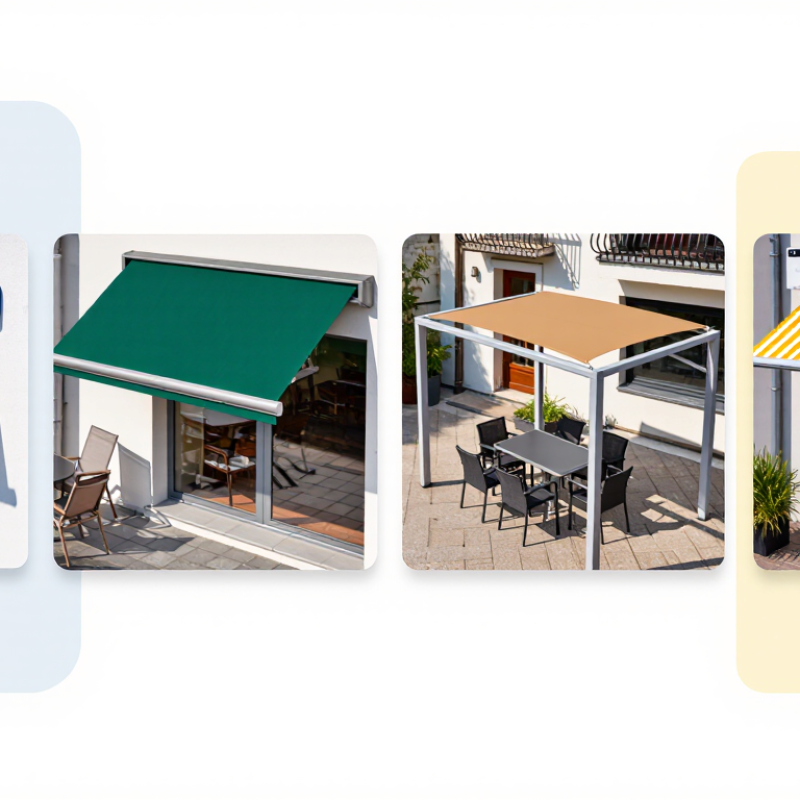
This guide introduces the main awning types used for homes, cafés, terraces, and commercial entrances. Retractable awnings offer adjustable shade and can protect outdoor furniture from harsh sunlight. Fixed awnings provide steady coverage and often suit windows, doors, and shopfronts. Freestanding models work well where no suitable wall exists, while motorized systems add convenience for larger spaces. Each option has practical strengths, but none is perfect.
Small details matter. A powder-coated aluminum frame may resist outdoor wear better than untreated metal. Solution-dyed fabric can help preserve color under repeated ultraviolet exposure. However, performance depends on fabric quality, drainage, local weather, and correct mounting. Professional measurements and manufacturer specifications should guide the final decision. Personal experience shows that a beautiful awning can become frustrating when its projection blocks a doorway or its angle holds rainwater. That point is easy to overlook. This overview compares the leading Sunshade Awning types, their best applications, limitations, and care requirements. It also encourages a realistic question: will the chosen system remain useful after the first season?
What Are the Top Sunshade Awning Types?
Fixed-Frame Awnings for Permanent Outdoor Shade
Fixed-frame awnings provide stable shade for patios, entrances, windows, and outdoor seating areas. Their rigid aluminum or steel frames remain installed through changing weather. Unlike retractable systems, they do not need daily adjustment. This makes them useful above doors, where constant coverage can keep rain away from the threshold.
During site inspections, installers often check wall strength, drainage paths, and the sun’s afternoon angle. A strong frame cannot compensate for weak mounting points. Masonry walls usually require suitable anchors, while timber structures may need reinforcement. The awning should also slope slightly, allowing rainwater to flow away instead of collecting near the front edge.
Fabric selection affects comfort and maintenance. Solution-dyed acrylic can resist fading, while coated polyester may offer practical water resistance. Neither material is maintenance-free. Dust, tree sap, and trapped moisture can shorten fabric life. Gentle cleaning and complete drying matter.
Size matters more than many homeowners expect. A shallow awning may leave chairs partly exposed after midday. An oversized structure can increase wind pressure and require stronger supports. Local building requirements should be checked before installation, especially in areas with heavy snow or strong seasonal winds. I once assumed a wide overhang would solve every shading problem. It did not; the nearby wall still reflected heat into the seating area. Reflective surfaces, ventilation, and seasonal sun angles deserve equal attention.
| Fixed-Frame Awning Type | Typical Cover Material | Typical Projection | Shade and Light Control | Weather Performance | Maintenance Needs | Best Applications |
|---|---|---|---|---|---|---|
| Sloped Metal Canopy | Powder-coated aluminum or galvanized steel panels | 0.9–2.4 m (3–8 ft) |
Provides consistent shade and blocks direct overhead sunlight. Opaque panels offer the highest light reduction. | Strong resistance to rain, ultraviolet exposure, and everyday outdoor use. Structural design and anchoring determine wind performance. | Usually limited to periodic cleaning, fastener checks, and inspection for corrosion or coating damage. | Building entrances, windows, walkways, loading areas, and commercial storefronts |
| Fabric Tension-Frame Awning | Solution-dyed acrylic, polyester, or PVC-coated architectural fabric | 1.2–3.6 m (4–12 ft) |
Offers filtered shade with a softer appearance. Fabric color, openness, and coating affect heat and glare reduction. | Suitable for outdoor exposure when the fabric is properly tensioned and drained. It should be designed for the local wind, rain, and snow conditions. | Requires regular cleaning and periodic inspection of fabric tension, seams, frame joints, and drainage points. | Patios, cafés, outdoor seating, residential terraces, and poolside areas |
| Polycarbonate Panel Awning | Solid or multiwall UV-protected polycarbonate sheets | 0.9–2.4 m (3–8 ft) |
Translucent panels admit daylight while reducing direct solar radiation. Tinted or bronze panels provide additional glare control. | Lightweight and impact-resistant, with good resistance to rain and ultraviolet exposure when UV-protected panels are used. | Needs gentle cleaning to prevent surface scratches and inspection of seals, edge profiles, and expansion clearances. | Doorways, balconies, walkways, bus shelters, and areas that need shade without losing daylight |
| Louvered Fixed Canopy | Extruded aluminum louvers with a coated aluminum frame | 1.2–3.0 m (4–10 ft) |
Adjustable or angled louvers can balance shade, ventilation, and daylight. Open gaps may allow some rain and sunlight through. | Durable in outdoor environments when the frame, connections, and drainage are correctly engineered for local conditions. | Generally low maintenance; periodic cleaning and checks of louver mechanisms, joints, and mounting hardware may be required. | Modern patios, restaurants, terraces, courtyards, and building façades |
| Glass-and-Metal Entrance Canopy | Laminated or tempered safety glass supported by aluminum or steel | 0.9–2.1 m (3–7 ft) |
Provides rain protection while preserving daylight and visibility. Tinted or low-emissivity glass can reduce solar heat and glare. | Weather-resistant when properly engineered, sealed, and supported. Glass selection must comply with applicable safety and building requirements. | Requires routine glass cleaning plus inspection of seals, brackets, drainage, and metal finishes. | Hotels, offices, apartment entrances, public buildings, and premium residential entries |
| Wood-Frame Fixed Awning | Treated timber, shingles, metal sheets, or outdoor fabric | 0.9–1.8 m (3–6 ft) |
Creates strong architectural character and effective shade when the roof covering is opaque. Shade level depends on roof pitch and cover type. | Performance depends heavily on moisture protection, timber treatment, roof detailing, and local climate conditions. | Needs more frequent inspection than metal frames, including checks for moisture, insects, cracking, peeling finishes, and loose connections. | Traditional homes, garden structures, cottages, restaurants, and heritage-style buildings |